

Leadership
Gulliver’s Travels: Highway head wanted meaningful stress, and got it
When he was 11 or maybe 12, Jonathan Gulliver designed and built a mousetrap out of Legos — a working mousetrap. Now he’s in charge of the design and construction of the new Cape Cod bridges, and those have to work too.
Those are milestones on a developmental arc that by no means led straight to where he is. When he was 23, he was managing the produce department at Victory Supermarkets, and state Undersecretary of Transportation — Highway Division was not a plausible scenario.
Today, if you get in your car and drive practically anywhere in Massachusetts, your trip’s quality is Gulliver’s responsibility. His department plans, builds, maintains and improves nearly 10,000 miles of state roads.
At the head of the 3,000 person, high-profile highway division, reporting closely to the transportation secretary and governor, he organizes his days around descending priorities that begin with the urgent and end with the important.
“The job here is a combination of policy, long-term planning, and operations, and it’s a balancing act between all of those.
“You know, you can have a really serious crash that’s going to take all your attention. You can have a construction issue, or God forbid, a construction accident of some kind that pulls you off and completely disrupts your day or your week, and you got to be prepared for that.
“And the way the way that I prepare for those things is to really make sure that I’m staying on top of the long term initiatives, whether it might be these policy planning efforts that are going on, or if it’s a long-term project development, whatever it might be — really trying to balance between the those long-term things to make sure they keep going and the here and now that happens on the day-to-day. The operations stuff will kill you in this job, for sure.”
Gulliver’s an engineer, and engineers don’t design things — they use science and math to tell whether, for instance, your elegant causeway will collapse a year after you build it, and how you might prevent that. But as Administrator, Gulliver’s also a leader, constantly called on to account not just for technical execution but public responsibility. He said he tries to keep it in mind as he leads, and mentors others at the Highway Division to do the same.
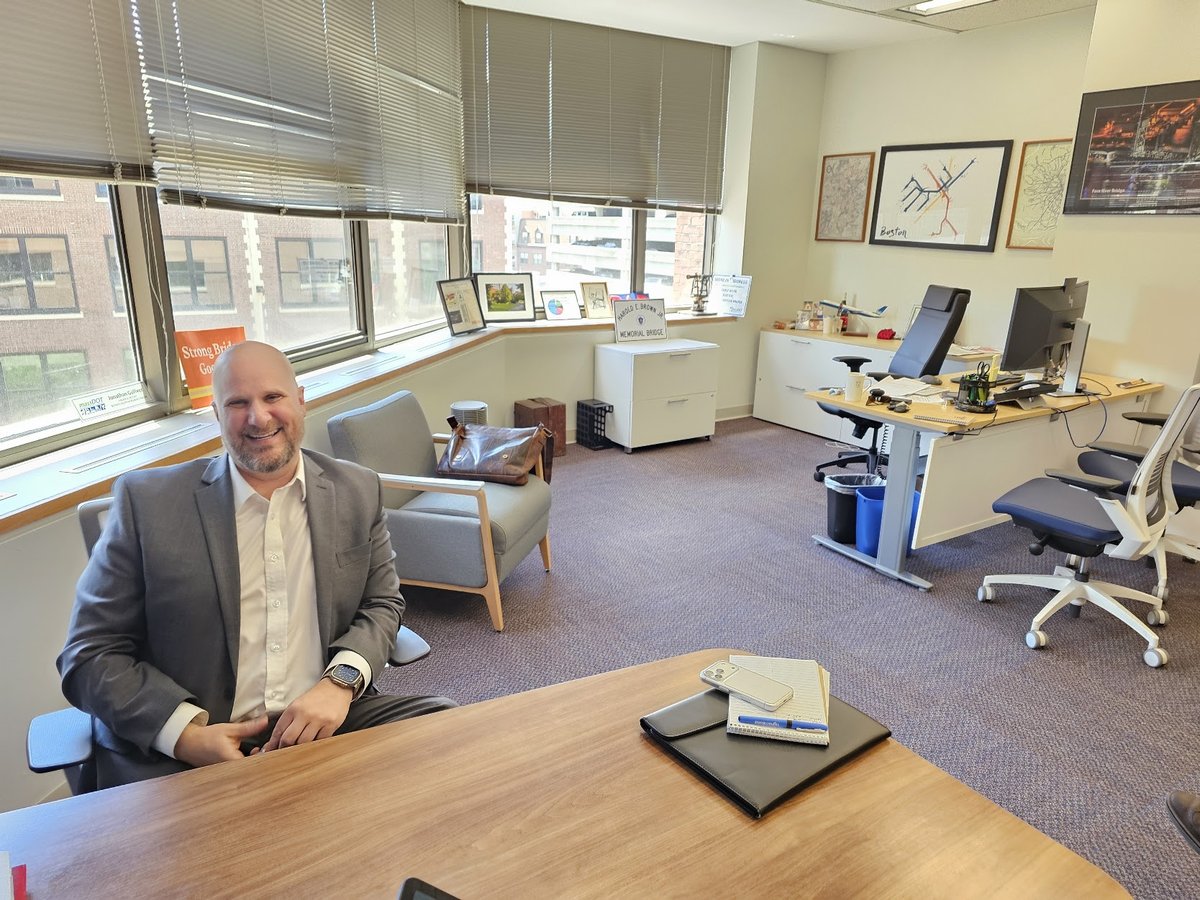
“Something I like to remind people about is that you know we can make decisions at my level that sound great, but there’s some kid working in that GCI 1 (General Constructor Inspector 1) job like I used to be, wondering, ‘Who’s the dipshit who came up with this?’, and I don’t want to be that guy. We do a lot of process improvement stuff as a result around that kind of approach, that I think helps us. People tell me it does,” Gulliver said, with a grain-of-salt grin.
He meets with his six district chiefs — each of them juggling their own long-term vs. immediate issues — and his operational division heads (Engineering, Construction, Operations, Traffic and Tolls) — once a month, and also has a monthly all-staff.
“Honestly, reality is that as much as I’d like to do one-on-ones with every single one of those staff every week, it’s impossible. We don’t have enough days in the week to do it.”
Those meetings and time with the governor, transportation secretary and cabinet, give him a picture of the long-term, the big initiatives, the policy initiatives, and the legislation the division is advocating. And then? He checks his smartphone.
“The way I manage my day, I start off every morning and every night by going through the Google alerts for the day. So it’s like, you know, when I wake up, I want to know, all right, what happened in my world overnight that I need to be on top of as I go into the office this morning. And then I do the same thing at night. You know, I should probably do it earlier in the evening because it makes my wife upset.”
Like many of his ilk, he operates on 4-5 hours of sleep, and in fact says, “I’m not a good sleeper… I’ve gotten better at this, but I am known to send many messages at three or four a.m.,” he says, and his director of communications Marshall Hook confirms it with a pained smile.
“There’s a few things that I try to live by,” Gulliver says. “One, understanding that our customer is the public and that’s a very important thing that I think people forget, is that we work for them, and we want to make sure that whatever we do, we have the public interest in mind.
And he sees other leaders make the mistake of micromanaging, and tries to avoid it himself. “I have to fight that tendency. I think this is an engineering tendency, is that you see a problem, you want to solve it. You want to be involved in problem solving, but it’s hard to be on top of everything.”
His start in engineering, through progressively larger and more demanding public works agencies, was fostered back at the Victory Supermarket by realizing what it meant to be a good produce-department manager: not enough.
Some of his friends seemed to be accomplishing bigger things, and one night, Gulliver recalls, “I remember waking up one day and being all stressed out about work and realizing what I was stressed out about was not anything that I considered too meaningful, but it was like you know it was important for the job. Things like, do we have enough strawberries for the sale today and stuff.”
And it was then he decided: “If I’m going to be stressed out no matter where I’m at, anyways, I might as well do something that I want to do. And that was really the reason I went back to school.”
Back to school meant enrolling at Worcester Polytechnical Institute, picking up where he’d left off once he’d earned a liberal arts Associate’s Degree from Mt. Wachusett Community College in Gardner.
Engineering was an appealing path for someone who can make Legos catch “tons of mice,” as he put it, someone who can say, “I was always the kind of kid who wanted to know how things work. My parents would come home and find out that I had, like, torn apart a stereo system, for example, I did that in fact. But I mean, not just unplug the speakers, but like unscrew it and see what was inside. You know, I would do things like that.”
With all that he was a natural engineer, and a good fit for WPI, he points to a touchstone in his earlier academic setting as pivotal to making him a successful leader of thousands of people, working in dozens of teams.
“One of the classes I took as an elective was a public speaking class, and you know it was one of those things. I just took it at the time, never thinking I’d ever have to use it. But you know, if you’re a bridge engineer or a traffic engineer, whatever it is, you’re very focused on your role. And sometimes getting people to understand, hey, look at this is our big picture. This is what we need to get done in general. This is why we all have to work together. Having those communication skills to kind of break down those barriers, I think has been something that’s pretty important.”
The dozens of local projects his division completes a year count as successes for the most part, but he’s under the most pressure for high-impact, impossible-seeming undertakings like the 2024 refurbishment of the Sumner Tunnel, which wrapped up early with less chaos than people expected, or the rebuild of the Longfellow Bridge. The traffic apocalypse expected during the World Cup did not come to pass. The rebuilding of the Mass. Pike interchanges at Rtes. 95 & 495 — the largest road projects in Massachusetts since the Big Dig — are literally works in progress, but have no room for error and so far don’t seem to be prone to it.
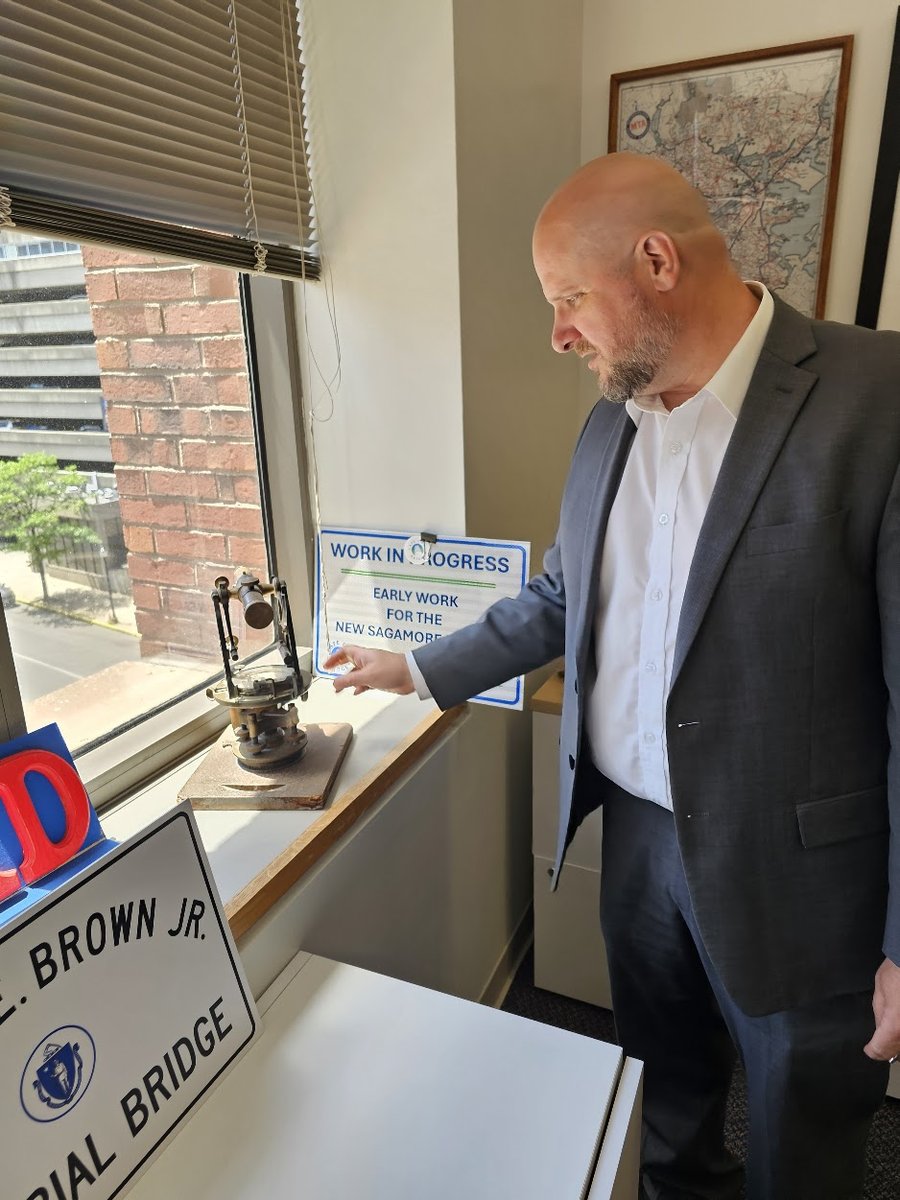
On the other side of the ledger are the Mass. Turnpike service-plaza replacement debacle, where Gulliver had to fall back to agreeing with Sen. Mark Montigny that the procurement process “sucked,” and an ongoing scandal and investigation of top maintenance workers in Charlestown who resigned after revelations of apparent overtime fraud. But it’s another situation he points to when asked for instructive failures: the abortive plan to totally make over the Storrow Drive Tunnel in the 2010s.
“We were doing a really big complete project that would last 75 years, and we just couldn’t get it over the finish line. There was too much divisiveness amongst stakeholders, both on the government side and in neighborhoods and the advocates.” He is not the first public executive to be educated by the unique challenges of pursuing goals in face of open, complicated stakeholder participation, and opposition.
“And you know, I look back on that experience, and I think, you know, sometimes knowing when to step away and really like just work to get the project done at a higher level is important.”
After some significant successes and a long list of smaller ones, asked for keys to his steady climb and long tenure, he directs the credit away from himself. “I think it was the team that we have here. I know that sounds like [B.S.], but, well, we have a really good team. One of the key changes for any leader is when they have the ability to bring their own people in to be on that team as well. You know, the one benefit of my longevity is that I’ve seen a lot of people come and go, and I’ve been able to bring some people up with me.
“Your success as a leader is when you can point to people who have moved on and had great success on their own that you worked with early on to build that success. We have a lot of really good people in government, and being able to work with those really good ones and get them in the right place to succeed is really important.”